
Relocating your business is an exciting time for everyone involved. Whether you are moving because of rapid growth, to explore new markets or to reach more talent, a business move can be much more than just a relocation.
Moving your business is an excellent marketing opportunity and can be the perfect reason for a much-needed rebranding strategy. No matter the type of business you have, a business rebrand can be an essential but difficult change, and when combined with relocating, it can be a real competitive advantage.
For many companies, their brand was created during the start-up stages. Over time, things can change dramatically, and the brand you formed in the early days may no longer fit your business. Perhaps you have expanded your product offering, changed your audience or adopted new business plans. Whatever has changed in your company; your initial branding might no longer be doing the job.
Executing a rebranding strategy requires careful planning to preserve your existing reputation and customer loyalty. Relocating your business is an excellent opportunity for rebranding, and there are a few things you can do to make sure it’s a success.
Embrace the blank slate
Moving your business means you have a blank slate to start again. It is a rare opportunity for a new beginning and to set out how you want your business to operate in its new location. Changing your office space or business location means you will need to update all your communications anyway.
This includes your website, social media, business cards, and any promotional items where your address is included. It is the perfect excuse to update brand marketing materials with a fresh brand design.
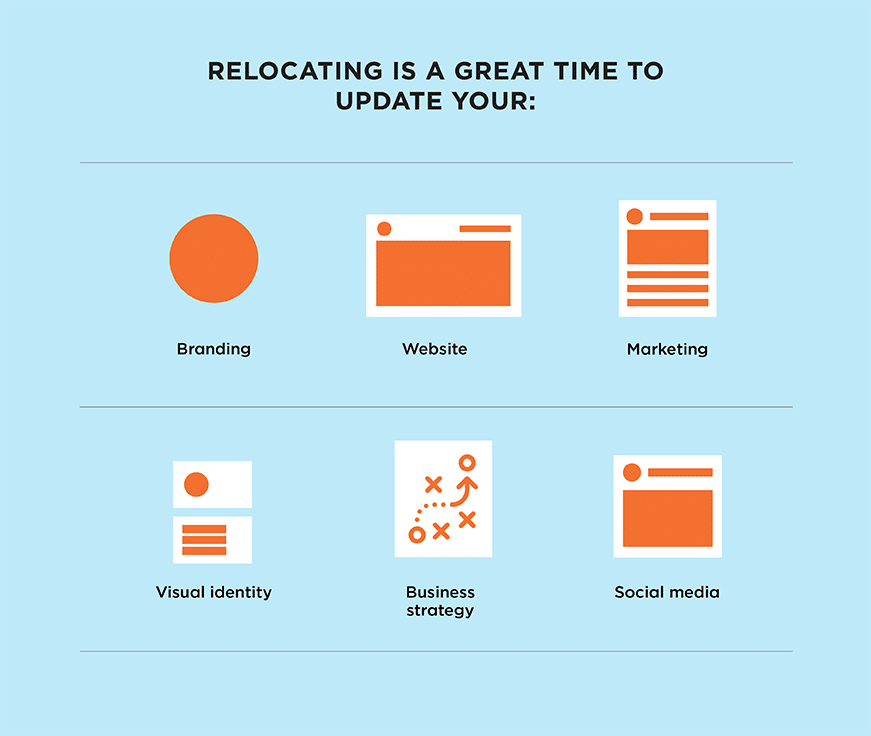
Relocating offers a prime opportunity to refresh your brand image—an ideal time for logo redesign, updating brand colours, and more. With a new location as a blank canvas for your branding, and the need to update all business collateral, rebranding at this stage can signify an exciting new chapter. Leading branding companies often recommend such strategic shifts to engage both customers and employees, creating momentum for your business’s fresh start.
If you are moving to a new area, where there is potential for new customers and clients, then a rebrand and relocation is a good reason to open lines of communication. The same goes for existing customers; you can use this new move to reconnect with past clients and let them know of your next steps as a business.
For some companies, it is easy to get stuck in a rut even when moving premises. It can seem like the simple choice to keep branding and marketing the same and simply update your new address, but this can be a huge opportunity missed. It isn’t often that a business gets a completely blank slate to start again, and it is the perfect chance to get your branding and positioning up to date.
Make location part of your brand strategy
If you have a business that depends on its location, then a move can be a pretty big deal. Whether you are operating a shop, restaurant, café, or other business that customers physically visit, then making your location part of your brand strategy is essential.
Establishing a foothold in a new local market can be challenging when competing against entrenched businesses with established referral networks. To build immediate local relevance:
- Implement a Local SEO Strategy: Optimise your Google Business Profile and website landing pages for localized keyword queries to capture high-intent local search traffic.
- Update Core Messaging: Incorporate local context into your tagline, homepage copy, and promotional materials.
- Leverage Social Channels: Build community engagement by sharing location-specific content and collaborating with regional industry groups.
Research your new market or demographic
Relocating to a new region often introduces shifts in customer demographics and competitor behaviour. Your updated rebranding strategy must reflect this audience to ensure maximum conversion.
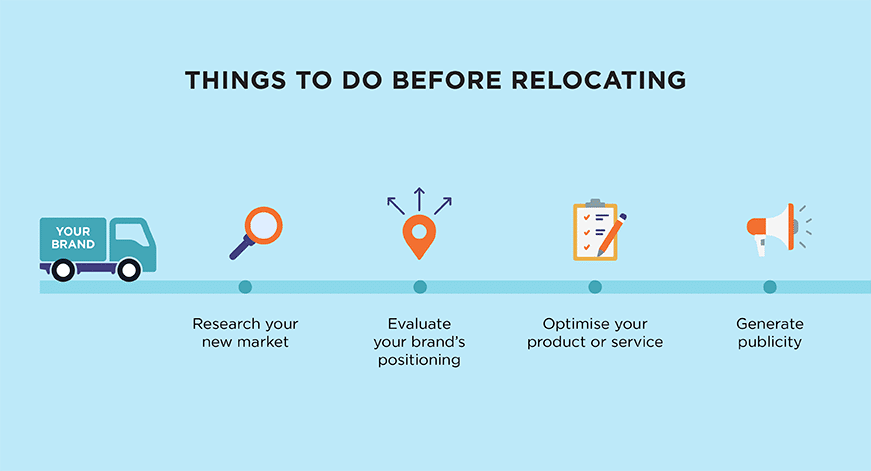
Spend some time researching your new market and demographic and complete local market research. This should be one of your first tasks before rebranding because if you get it wrong, you could miss the mark completely.
- Start by thinking about a few core questions about your business structure in its new location. A few important things to consider include;
- How large is the geographic area your business will be serving?
- How large is the local market in your new location?
- How far will people be willing to travel to reach your new location?
- How many competitors are there in the area?
- What are your competitors’ unique selling points?
Once you can answer all of these questions, you will have a solid foundation for researching your local market. If you start researching too broadly, you can waste a lot of time and effort focusing on demographics and businesses that aren’t relevant to you.
After determining your local area and competitors, you can define who your ideal customer is. This is essential for rebranding, as your new branding strategy must resonate with this audience. Think carefully about who your ideal customer is, what they want from your business, and where they will be looking for your services. To determine your new market or demographic, think about;
- What their pain points are?
- What solutions might they have already tried?
- What they liked and disliked about other solutions?
- What is their average age and income level?
- What values do they look for in a business?
- What online platforms do they spend time on?
This information will help you create a rebranding strategy that is relevant to your new market and reach the right audience.
Evaluate positioning strategy (Including any new competitors)
As part of your research into new markets, it is essential to evaluate your new competitors and develop a solid strategy for your positioning. When you relocate your business, your positioning as a brand can also change significantly. What worked well for you in one place, might not be a success elsewhere, and that is why you need to evaluate your new brand positioning strategy.
Brand positioning is all about how you place yourself among your competitors and in the minds of your customers. It is your niche, and the reason customers should choose you over your competition. The idea behind a positioning strategy is to create a completely unique impression on your audience, making you stand out from the rest.
When you are relocating your business and also rebranding, look closely at any gaps in the market and evaluate how your new competitors are positioning themselves. From this information, you should be able to create your own positioning strategy and bear this in mind during your rebrand.
Your new brand will be positioned within the market whether you make it part of your branding strategy or not, so being proactive and developing it yourself is a good idea. This gives you the chance to get ahead and create an intelligent, forward-thinking approach to your brand’s position. It is crucial you don’t position yourself in the same way as an existing competitor, so understanding who they are and what they do is vital.
Optimise your product or service offerings
Rebranding is an excellent opportunity to look closely at your products and services and determine what is working for you and what isn’t. If you have recently introduced new products or services that differ from when you first created your brand, you might need rebrand to make these relevant. Or maybe you have been avoiding introducing new products because they haven’t fitted with your existing brand?
Relocating to a new area and a new customer base is also an excellent reason to optimise your offering. Perhaps what worked in your old location won’t be as popular in your new space, or your new premises might have more room for new products and services.
Look closely at your current offering and how well each is selling among your audience. Consider which products and services might no longer be working for you and if there are any new ones that could be worth introducing.
Changing your location, brand and product offering all at the same time can seem daunting, and it is important to approach this carefully so as not to lose your loyal customers. Be sure to keep your existing products and services that work well and are proving popular, and only make changes if they are going to be worthwhile for your new brand.
For some businesses, the products and services on offer might not need to change at all, but the way they are marketed might need adjusting.
Generate publicity via local newsletters and websites
When launching in a new territory, driving immediate brand awareness is essential. Capitalize on regional media channels, local business chambers, industry newsletters, and regional digital publications to announce your arrival.
Highlight both your new physical premises and the evolved strategic focus of your business. Sharing your brand transformation narrative helps establish immediate credibility with nearby clients and potential business partners.
Use sales and offers to your advantage
Everyone loves a bargain or a special offer, and what better way to celebrate your new location and rebrand than with a sale? Sales and offers are an excellent way to get new customers through the door and gain some momentum for your business.
If you have a brick and mortar location, then run special sales and discounts for customers that visit you in person in your new location. For online promotions, try using special offers to encourage new customers to try out your products and services.
Sales and offers are also the perfect way to announce your rebranding. You can use your rebranding materials to tie into your sales marketing activities and get your new look out into the world. Promote any sales and offers on your social media pages, as well as your website and in-store. It can also be a good idea to promote sales and offers to your existing email database and let them know about your new location and branding.
Incorporating your new business information alongside discounts and special offers is an easy way to let your audience know about your changes in a way they will pay attention to. A marketing campaign that simply informs your audience of your move and rebrand might be ignored or dismissed. But adding a sale or offer to the message will help you grab the attention of your audience.
Hold an opening or reopening event
One of the most effective ways of promoting your new business location is to host an event. If you have moved to an entirely new location and developed a new brand, then a grand opening is an excellent way of getting new potential customers through the door. If you haven’t moved too far, then a reopening and inviting in existing customers as well as new is good for raising brand awareness.
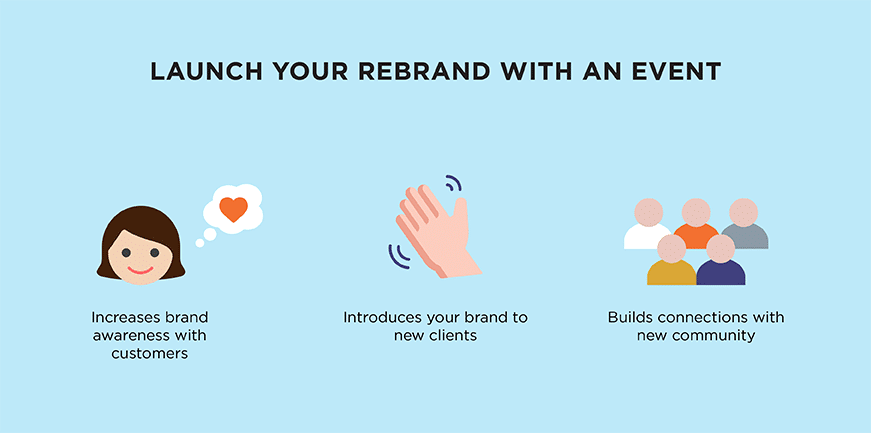
Hosting a fun event that customers will remember is an effective way of boosting your new brand and getting into the minds of customers. It is also an excellent way of showing off your new location and all the hard work that has gone into it. Not only that but when your audience are in your business and engaging with your brand, it is an excellent opportunity to showcase your products and services.
An opening event is also an excellent opportunity for marketing and promotions, giving you something to shout about on social media and in the local press. Share your rebrand and your new location with current and potential customers, new business neighbours, and local journalists. When you host a successful event, your brand will stick firmly in the minds of all those who attended.
Related Questions
How can I use branding in my office or store interior design?
When we think about branding, we usually think about logo design, colour schemes and fonts, but it is so much more than that. Your business premises have a significant impact on how customers perceive your brand. Your office or store is an extension of your business and should fit with your brand image.
Think carefully about the layout of the space and how it makes customers and clients feel when they enter. Incorporate your brand colours into your rooms, either through decorations, furniture or artwork. Use your branding in your office or store interior to reflect the values of your business and communicate it to your audience.
What colours are the best for brand signage?
As part of your rebranding, you might be considering changing your colour scheme. When it comes to signage, there are a few colours that can work better than others. Colours can communicate different messages, and the shades you choose will define your brand.
For example, red signage can represent taking action, being passionate and energetic, but it can also symbolise danger, warning or anger. Blue creates a feeling of trust and security whilst also being relaxing and tranquil. Green is associated with nature, health and wellbeing, whereas orange can be motivating and encouraging. Think carefully about the feelings you want your brand signage to create among your audience.
Ready to turn your move into a market advantage?
Relocating your business is the ultimate opportunity to elevate your brand positioning and capture new market share. If you are planning a move and want to roll out an impactful rebranding strategy, we can guide you through every step of the process.
Work with a leading branding agency Melbourne businesses have trusted for over 30 years. Contact Liquid Creativity today for a strategic chat about your upcoming rebrand.
