
Brand consistency and familiarity are essential for building trust with your audience. However, there comes a stage in every business lifecycle when your brand identity is ready—or overdue—for a modern update to keep resonating with your target market. So, when to rebrand?
When it comes to branding, change can be a difficult thing to master. On one hand, a company evolution can unlock new growth; on the other, changing too much risks alienating the customer relationships you have worked hard to build. Here are the key indicators that a strategic rebranding is precisely what your business needs.
Five key moments to tell you when to rebrand
1. Your brand portrays the wrong image
Occasionally a branding or marketing mistake leads to a misalignment between what your brand is and what you want it to be. When customers see a poor representation or have the wrong perception of your brand, it can be hard to maintain a consistent and successful brand that talks to the right people. Consequently, a rebranding strategy may be necessary to get your brand where you want it to be again.

2. There’s a management changeover
With a new CEO or management structure, they may understandably want to put their own stamp on the business. What’s more, a rebrand can help to celebrate the progress of the brand and celebrate the fresh approach in the business. So, with new management bringing changes, a rebrand is a great opportunity to reflect those changes.
3. You’re part of a merger
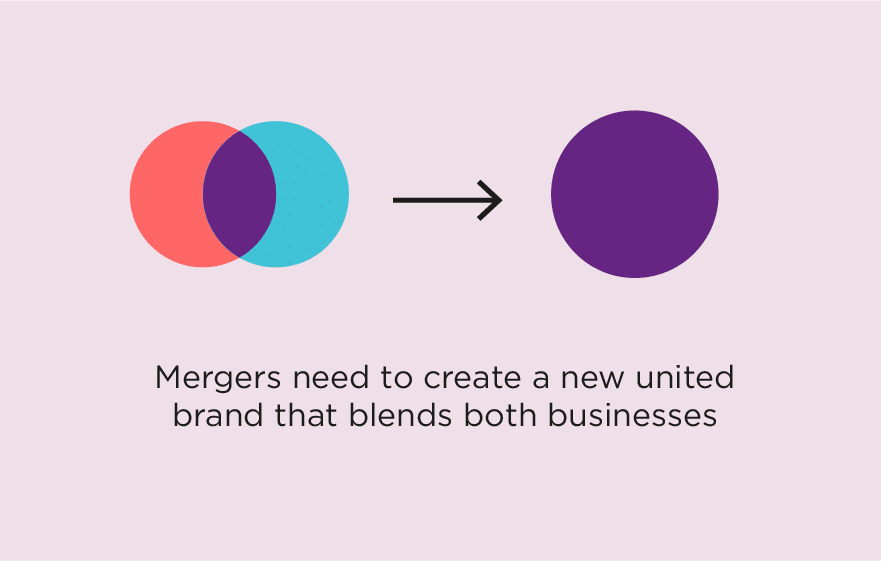
If you partner with another business, you’ll need to blend both companies together and be a united brand. Each business will have its own brand story, identity and imagery, and it is often too difficult to combine the two.
This is where a total rebrand or consolidation is necessary. Pick the best aspects of each company and create a powerful new branding with a combined message that reflects a united front rather than a disjointed pairing.
4. There’s an acquisition
An acquisition can feel like one company is swallowed under another. Alternatively, when the branding stays the same but there are subtle differences in the service and background which people notice, mistrust of your brand grows.
An acquisition can be a lengthy process, and it can take a long time to get the branding right. However, it is well worth implementing a rebranding strategy to ensure the brand message is consistent so there are no discrepancies now that the two businesses are one.
5. It’s time to draw a new crowd
As time changes, so will your target market. The audience you wanted to attract ten years ago will have grown up, and it may be time to appeal to a new generation of consumers. Alternatively, your last branding project may not have quite hit the mark with your ideal target market. Regardless of what has gone before, if you’re not reaching the right audience, then a rebrand may be necessary. It could be the best way to get your brand back in front of the people you want to attract.
Do you suspect it is time for a company rebrand?
Do you recognise any of these signs—from shifting leadership and market growth to a brand identity that no longer hits the mark? Navigating a company rebrand doesn’t have to mean losing the trust you’ve built.
Our brand strategy and design experts here at Liquid Creativity, a leading branding agency Melbourne businesses rely on, can help you manage the transition seamlessly.
Whether you need a subtle brand refresh or a comprehensive corporate rebranding strategy to capture a new crowd, we’re here to make the difference you want to see. Find out more by getting in touch to arrange your free consultation.
